I spent a lot of time analyzing hardware developments and space technology, but every once in a while, a concept surfaces that sounds straight out of a classic sci-fi novel. Yet, the deeper you look into the actual mechanics and engineering behind it, the more you realize it’s the most logical step forward.
We’ve all seen China rapidly accelerating its space program over the past few years. Their ambitious International Lunar Research Station (ILRS) project aims to build a permanent, fully operational base near the Moon’s south pole by 2035. But what caught my attention this week wasn’t just another rocket test or lander prototype—it was their plan for who (or rather, what) will be keeping the human astronauts company on the dusty lunar surface.
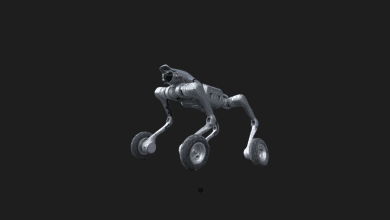
China is actively developing specialized four-legged robotic dogs designed to work side-by-side with human pioneers on the Moon.
Why Ditch Wheels for Four Legs?

When I look at classic space rovers, I see massive, multi-wheeled machines engineered for steady, slow rolling across relatively flat terrain. They work great for long-distance scouting, but the Moon’s south pole isn’t a smooth highway. It is covered in loose regolith, jagged rocks, steep crater slopes, and unpredictable drop-offs.
Wheels slip, sink, and get stuck. Legs adapt.
The engineers behind this project realized that quadrupeds offer distinct mobility advantages in treacherous lunar topography:

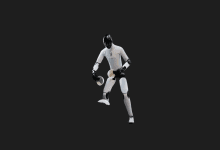
- Terrain Adaptability: A robot dog can step over jagged boulders, scramble up loose gravel slopes, and maintain balance on uneven crater rims where traditional wheels would simply spin out.
- Risk Mitigation: Astronauts shouldn’t have to risk suit tears or life-support failures every time a routine maintenance check or geological survey needs to be done. A quadruped can step out of the airlock, scout ahead, and handle dangerous reconnaissance entirely on its own.
- Modular Multi-Tasking: The concept envisions specialized units working in packs. You could have one robot mapping the terrain with LiDAR, a second collecting geological core samples, and a third acting as a mobile telemetry and communications relay for an astronaut walking behind them.
As someone who watches autonomous systems closely, I know that building a robot dog for a controlled indoor factory or a city street on Earth is one thing. Building one to survive the Moon is a completely different ballgame.
On Earth, AI models rely on deep training datasets built from predictable lighting, known gravity, and clear atmospheric conditions. On the Moon, these quadrupeds will face challenges that no terrestrial training dataset can fully prepare them for:
- Extreme Environmental Hazards: Abrasive, static-charged lunar dust that destroys mechanical joints, zero atmosphere, and drastic temperature swings between extreme light and deep shadows.
- No Terrestrial GPS: They can’t ping a satellite network for position tracking. China is planning to build a dedicated lunar communications and navigation infrastructure, but until that is fully operational, these robots must rely heavily on real-time, onboard spatial intelligence.
- Low-Gravity Dynamics: Moving on four legs in one-sixth gravity requires completely rewritten physics models for locomotion and balance control to prevent the robot from bouncing uncontrollably into the void.
Hardware Evolution: From Gimmick to Space-Grade Tool
A few years ago, many people dismissed robotic quadrupeds as viral internet novelties or expensive toys. I’ve always argued that their true potential lay in hardware flexibility and physical automation. Seeing a major space agency integrate them directly into a 2035 permanent lunar base architecture proves just how far this technology has come.
As we purge our reliance on purely digital hype and look toward real, physical hardware breakthroughs, the convergence of advanced robotics, space exploration, and autonomous AI is where the real future is being forged. If China successfully deploys these packs to patrol the lunar south pole, it won’t just change lunar exploration—it will set a new baseline for how humans and autonomous machines co-exist in off-world environments.
Would you feel safer exploring an uncharted lunar crater with a pack of autonomous robotic dogs walking ahead of you, or does trusting an AI machine on the Moon feel like too big of a risk? Let me know your thoughts down below!
You Might Also Like;